


Every morning, my aunt in Kumamoto sends me a Facebook Reel. Sometimes it’s cute animals, but more and more, it’s things like a foreigner doing something rude on a train, a shop sign in a language she can’t read, a tourist climbing something she definitely shouldn’t. You get the theme.
No shade to my cute aunt, but she’s 71, and never had a problem with a foreigner in her life. And now she’s completely certain that Japan is being overrun by foreigners.
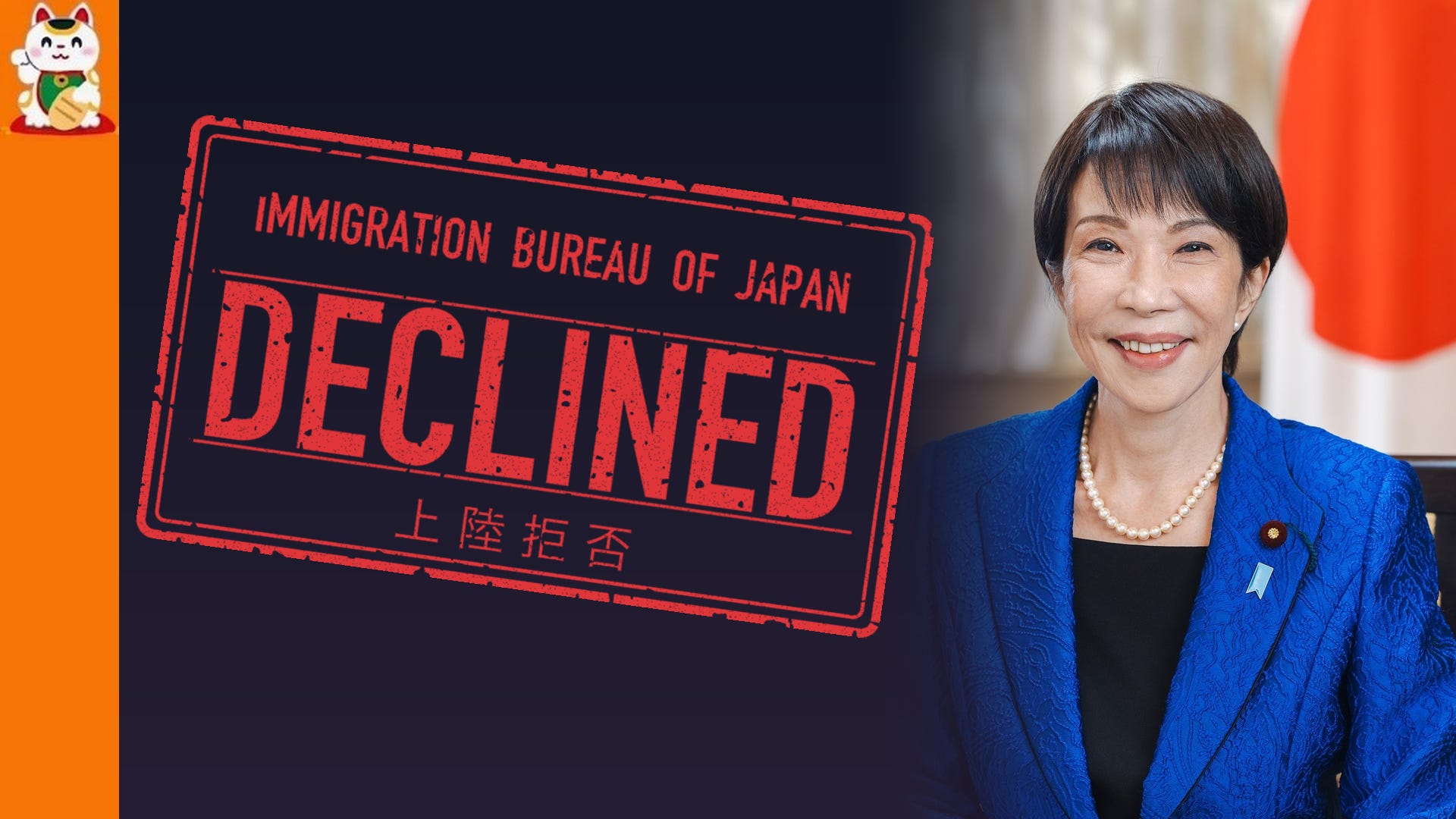
Last month she sent me a clip of Sanae Takaichi at a podium, subtitled in yellow karaoke font, listing measures her government had passed to “protect” Japanese people. My aunt’s message underneath: 頼もしい. Dependable.
On the point of whether Takaichi can move Japan’s overly complicated government bureaucracy, my aunt is actually right. This woman is fast: She took over a minority government in October, called a snap election in January, and won 316 seats out of 465 on February 8 (that’s the largest single-party victory since Japan became a democracy).
Kinda impressive, if you ask me.
Takaichi knows how to get support
Attacking foreigners for all ills is not exactly a groundbreaking strategy, and with Japan, one of the world’s most homogeneous countries, experiencing an unprecedented wave of tourists (42.68 million last year, up 15.8%), the strategy is ripe for the picking.
With most Japanese people seeing tourists and immigrants as the exact same thing, her message works! And the weak yen really helps Takaichi here. When your whole country goes on sale you start getting the same kinda “bad” tourists that usually flock to Thailand or Bali, if you know what I mean…
And immigrants, even if the numbers are small, have increased rapidly. 4.12 million foreign residents at the end of 2025, past 4 million for the first time ever, and up 9.5% in a single year. So understandably, immigrant fear is at an all time high.
In such an environment, symbolic gestures to restrict immigration have been proven popular, and Takaichi is very, very good at exhibiting every single proposal passed as another curb on immigration.
Her “anti-immigrant” proposals are small though.
Visa fees are going up, especially the permanent residence fee, which went from ¥10,000 to ¥300,000. This is the first it changed in almost 30 years, and the fees are still cheaper than in most other countries. Take Australia for example, which charges over a million yen for its PR application.
The administration is also working hard on a pre-travel screening system called JESTA, kinda like the US one, arriving in 2028. And a proposal, still only a proposal, to triple the departure tax to ¥3,000 is in the works.
But there are some changes that are really making the headlines: The Business Manager visa is one. You see, before, if you had ¥5 million, you could put it into a business here and get a visa. Late 2025, Takaichi’s government raised that to ¥30 million, a six-fold jump.
Sounds like a massive wall to stop foreigners buying their way in, right? Not really. Out of 4 million foreign residents, this visa is used by about 1% of them…
Or take the change that really has the foreign community sweating: The PR revocation rule.
You thought you could stay forever just because you had permanent residency?? Well, not anymore. Starting in 2027 the government can strip you of it if you fail to pay your taxes or social insurance.
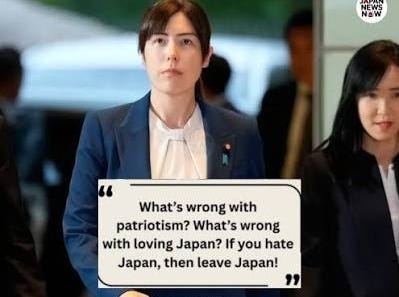
Takaichi leaned into this hard. She created a brand new cabinet post for it, and appointed hardliner Kimi Onoda as minister for “existing with foreigners.” Onoda immediately went on TV promising to create a situation where foreigners who do bad things will no longer exist in Japan.
It plays amazingly well on TV and social media, but in practice it targets a tiny fraction of people, because to get PR you usually work for a company in Japan, and if you do that they pay your taxes and your pensions for you. You literally cannot cheat the system as long as you work there. This rule is written to catch the rare deliberate tax evader.
It’s all really just posing…
I mean, even her flagship proposal, stopping foreigners from buying land near Japan’s army bases, has been really watered down. It started as a way to go after the Chinese, people they thought might become spies. Now it’s every person, Japanese included, who can’t buy that land. And now it looks like it won’t even include houses.
I don’t think any of these proposals are necessarily bad, and many of them are actually quite needed. They might not stop immigration, but they’re still very popular.
So what’s the damage?
Sure, be against immigrants, but…
One can absolutely be against immigrants. That is every person’s right and I think there are many valid points to limit immigration. But for the same reasons populists always lose popularity where they finally get to taste the sweet juice of power, this rhetoric won’t fix any of the core issues...
The real effects Japanese people are feeling, what genuinely makes them suffer, is that they are consistently getting poorer.
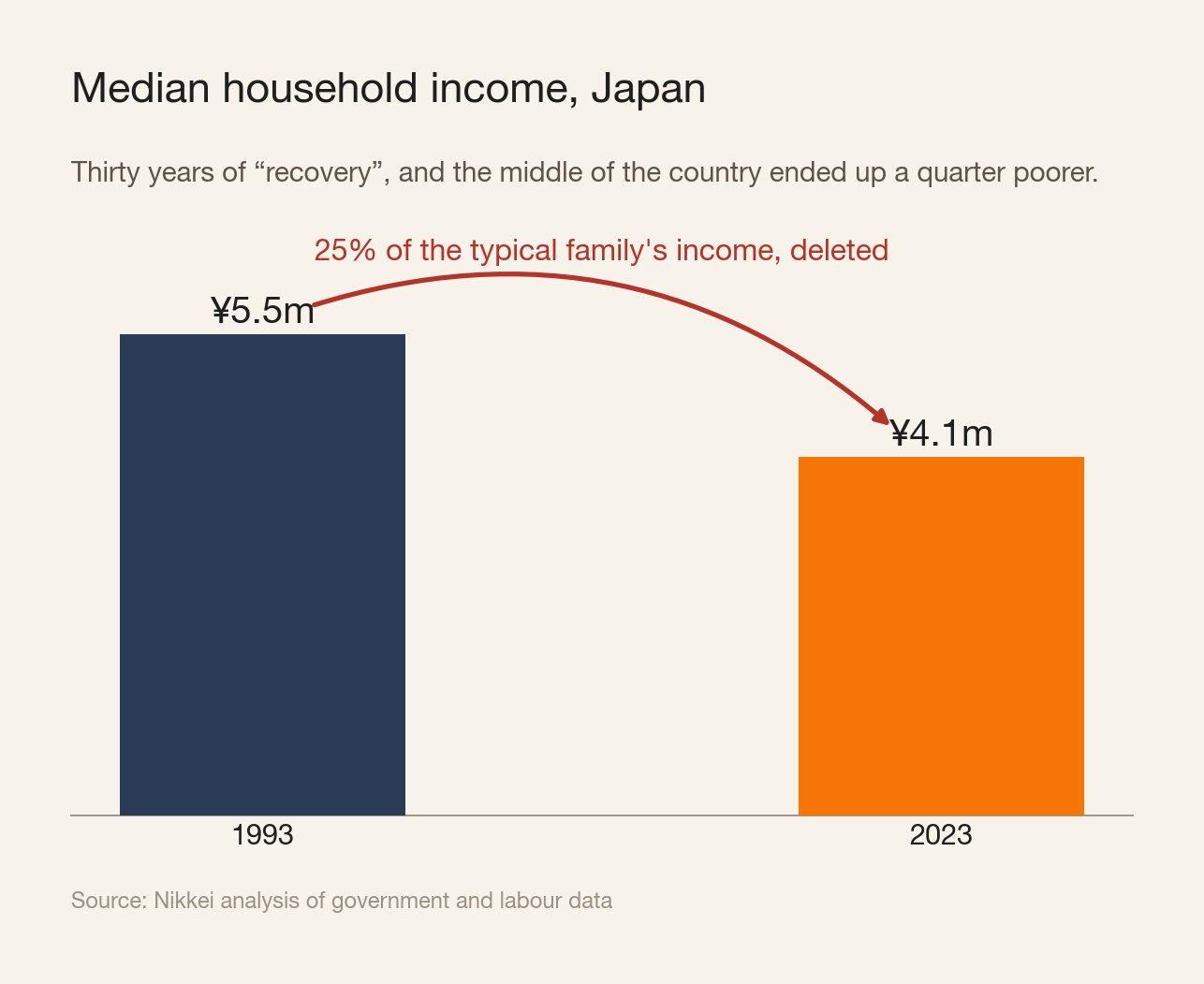
Japan’s middle class has lost a lot of power since the 90s. A LOT of power! Median household income in 1993 was ¥5.5 million. In 2023, 30 years later, mind you, it had gone down to ¥4.1 million.
And salaries never came back either. The average private sector salary peaked at ¥4.67 million in 1997. It hit a “record” ¥4.78 million in 2024, which got very cheerful headlines, but in inflation adjusted terms, it’s still below 97.
Upward mobility has gotten worse too. Japan used to be the country of the salaryman, the full-time office worker which almost all Japanese men were. At some point the country split in two. Now almost 40% of the workforce are non-regular, averaging about ¥2.06 million a year against ¥5.45 million for a full-time employee. These people have almost no ladder, and a very hard time becoming regular workers.
And then there’s the tax increases, which really wind me up: In 1975, taxes plus social insurance came to 25.7% of national income. Now it’s 46.2%. More than half of that increase is the social insurance premiums, aka pensions. That means real disposable income is about ¥11,000 a month lower than it was in 1988.
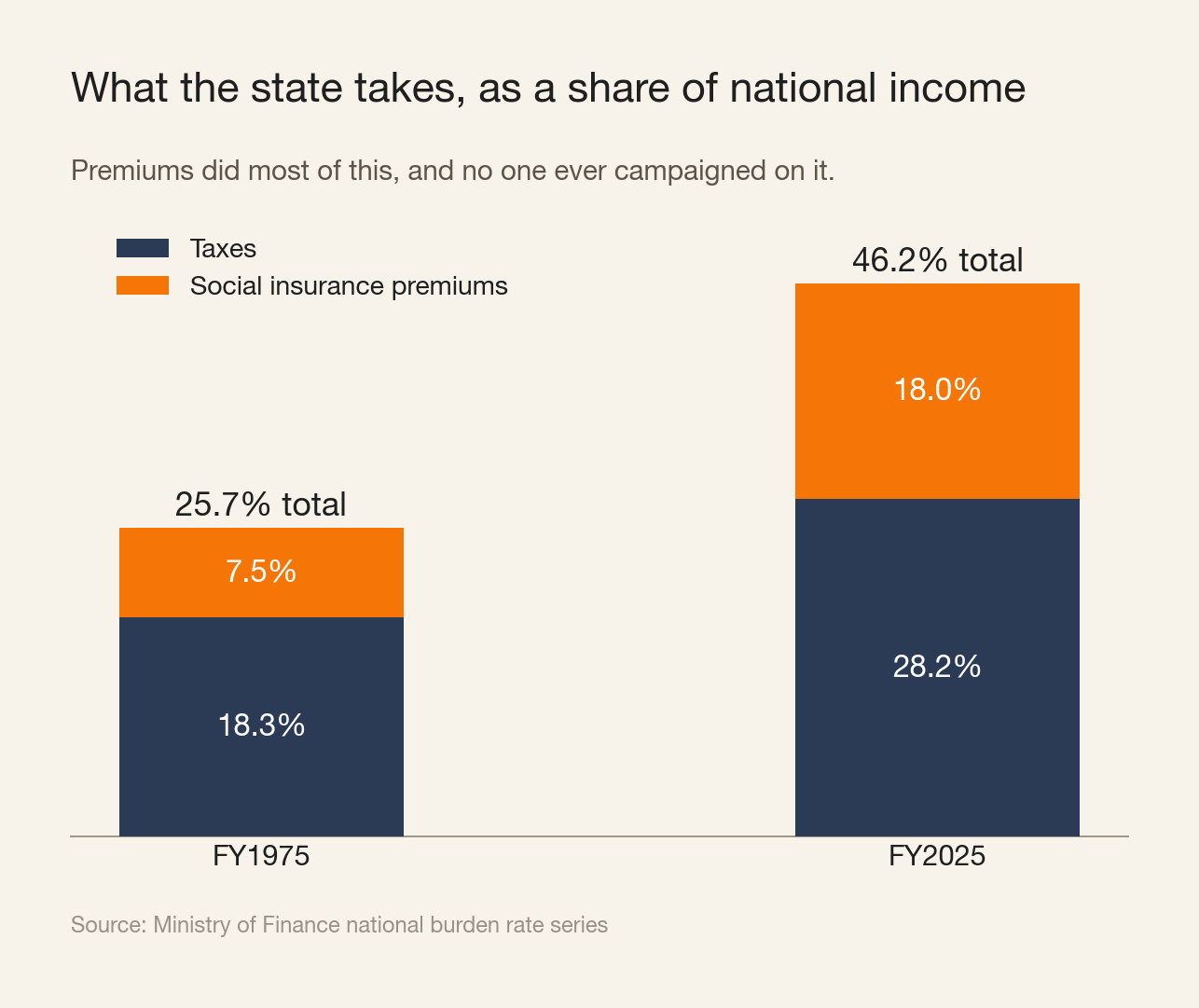
And the result of this? Well for one, the household average savings rate has gone from 23.2% in the mid-70s to 1.1% right now.
And the second degree effect? In 2019, 20.08 million Japanese people went abroad. In 2025, after the so-called super recovery, 14.73 million went. That’s fewer than in 1996, when 16.69 million went.
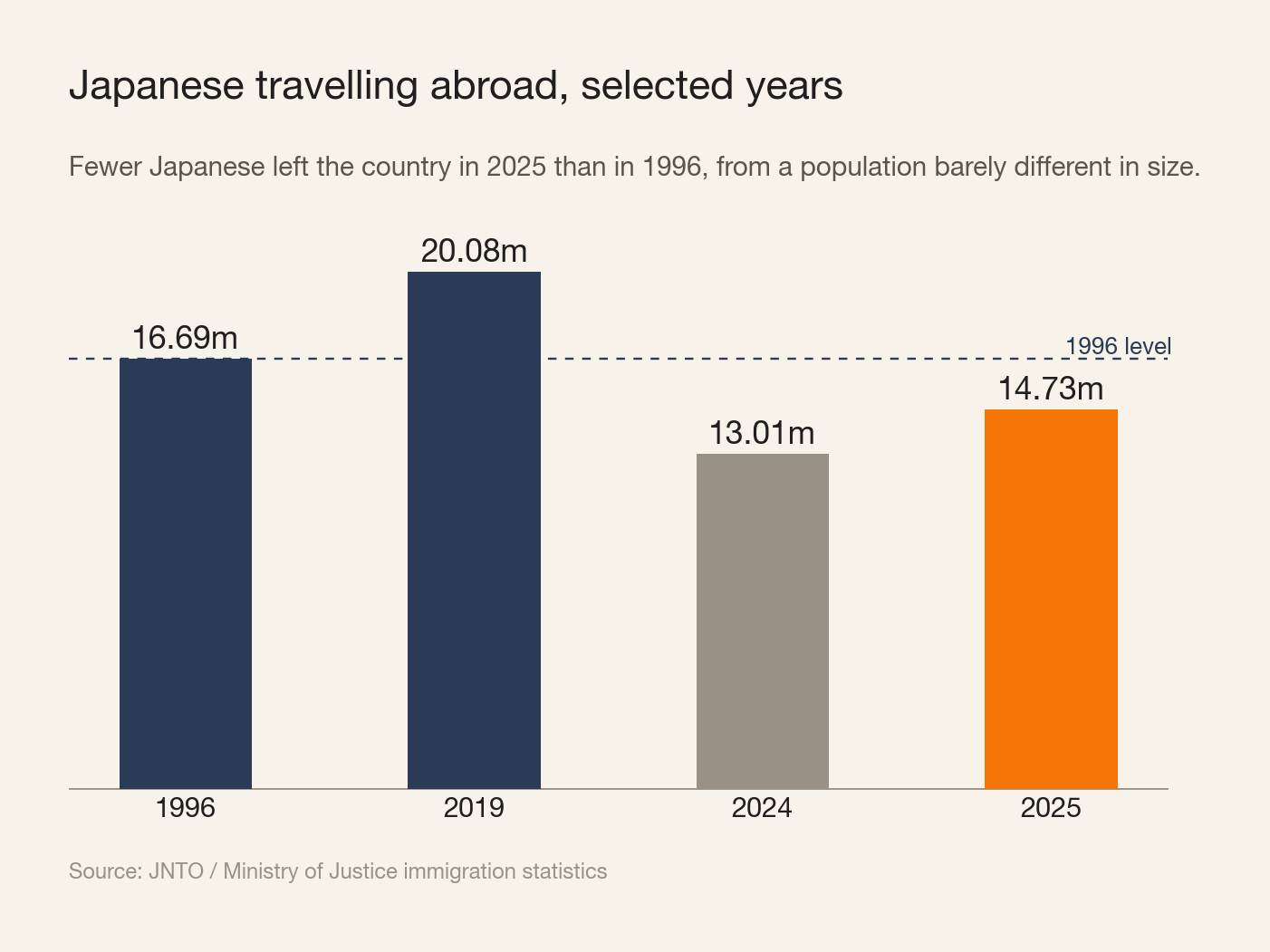
It’s sad...
In the 80s and 90s a generation of salarymen did Hawaii for the honeymoon and thought nothing of it. Some people went every year and spent crazy money. I know friends who go to Seoul for two days now and call it the vacation of a lifetime. No shame to them. But is that really where Japan has gotten?
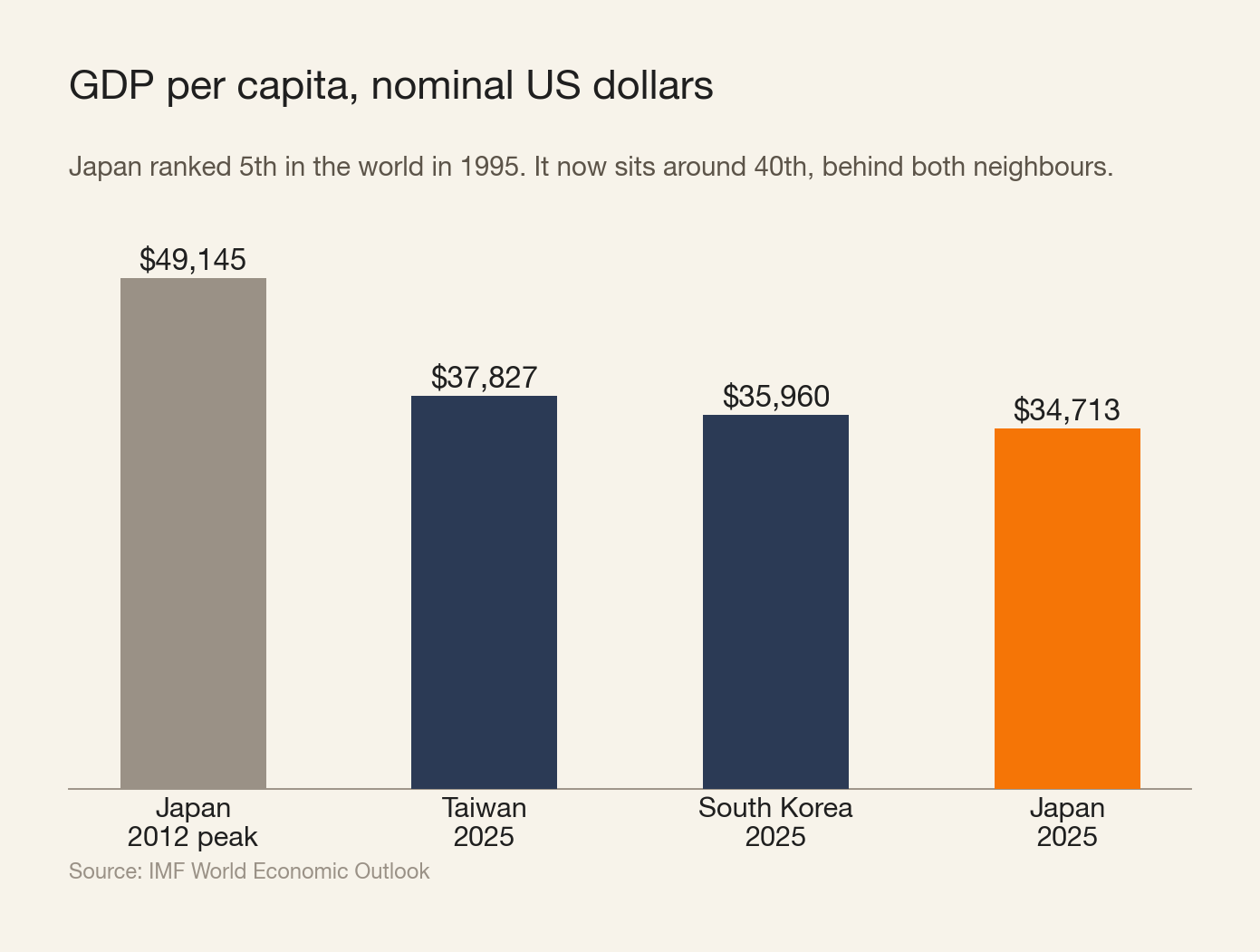
And I can’t help comparing Japan to its neighbors. GDP per capita was $49,145 in 2012. In 2025 it’s $34,713. Japan, that used to be by far the richest country in Asia is now behind Taiwan at $37,827 & South Korea at $35,960. Japan ranked 5th in the world in 1995 and sits somewhere in the 40s now.
So what is Takaichi doing about Japan’s poverty?
First, fuel subsidies. Yes, Japan gives tons of fuel subsidies, especially on gas.
Rural households save something like ¥20,000 to ¥30,000 a year in rural areas where most people have a car, against around ¥4,000 per person in Tokyo, where most people don’t.
But the problem with any fuel subsidy is that it pays you in proportion to how much fuel you burn. If you own two cars and a boat, well, that beats a 20-year-old with a tiny kei truck in the countryside.
Meanwhile ¥1.5 trillion a year of the national budget goes to these subsidies. I think it could have been way better spent. But fine, Takaichi, this one I give you.
Then there’s her constant handouts. With the help of governors around Japan, she decided ¥7,000 off electricity and gas over three months was in order. Then ¥20,000 per child, a one-time gift, and ¥3,000 a head in rice coupons.
Yeah, sure, this sounds nice. It’s not a policy though, it’s a handout.
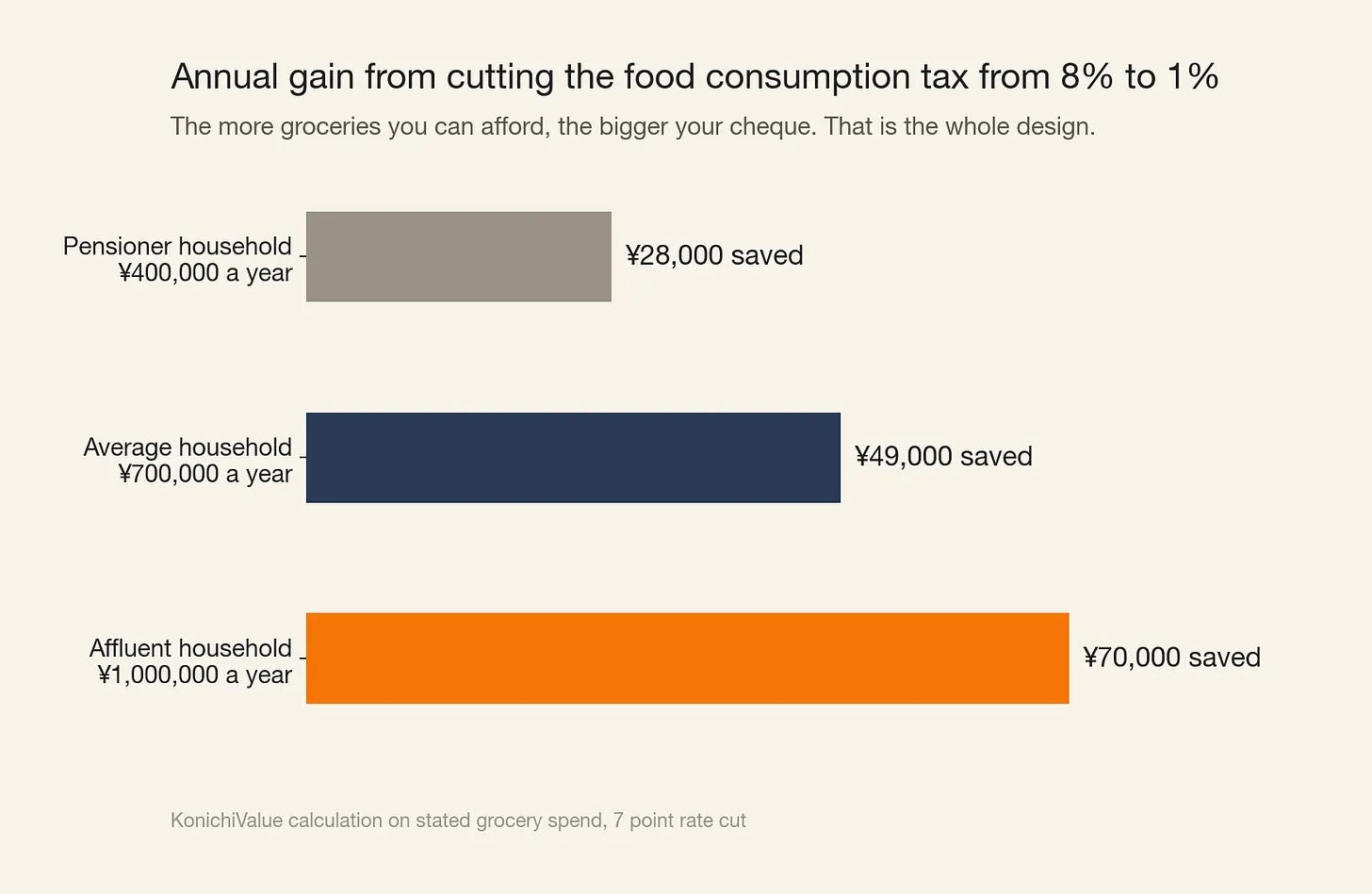
Then her signature policy: She’s trying to drop the consumption tax on food from 8% to 1% for two years, starting April 2027. A best case scenario is a 7% discount on all food items… at the cost of around ¥4.4 trillion a year.
I really don’t like this one, because it favors people who have money to spend on food. If you spend ¥1 million a year on groceries, yeah, you save around ¥70,000. If you’re a retired person spending maybe ¥400,000, you save less than half. That’s not fair. And I bet you poorer people spend less on groceries, which means this is basically a subsidy for people buying ¥10,000 melons.
On top of that it won’t even do that much. Economists expect a good chunk of it to get absorbed into prices instead of passed on to shoppers, so you might just end up funding inflation. Political heavyweights Taro Kono and Takeshi Iwaya have both come out against it, and former PM Ishiba reportedly walked out of the meeting halfway through.
And the worst part is that Takaichi herself called it the “core of her reforms.” Basically saying this food cut is a bridge until she builds something more sustainable, possibly a overall consumption tax cut to 1%. So, a subsidy on rich people’s consumption habits that could cost over ¥10 trillion a year, is her best policy to defeat poverty?
Now the good stuff, because there is some.
First, the income tax threshold. This is the one nobody talks about. About ¥1.2 trillion of cuts, worth ¥20,000 to ¥40,000 to each affected taxpayer. I really like this one because it’s targeted. People who earn the least who get money straight into the pocket, working class people. This should be the target of her policy.
And then there’s another one I really like.
Takaichi is working hard to get nuclear plants running again. After the 2011 Fukushima nuclear disaster, all nuclear power plants were shut down, and to this day, most are still not fully operational. However, under Takaichi’s watch, already 15 out of 33 reactors are online. In Kyushu, where the most plants have been brought back, electricity is now about 10% cheaper than in Tokyo, where they haven’t.
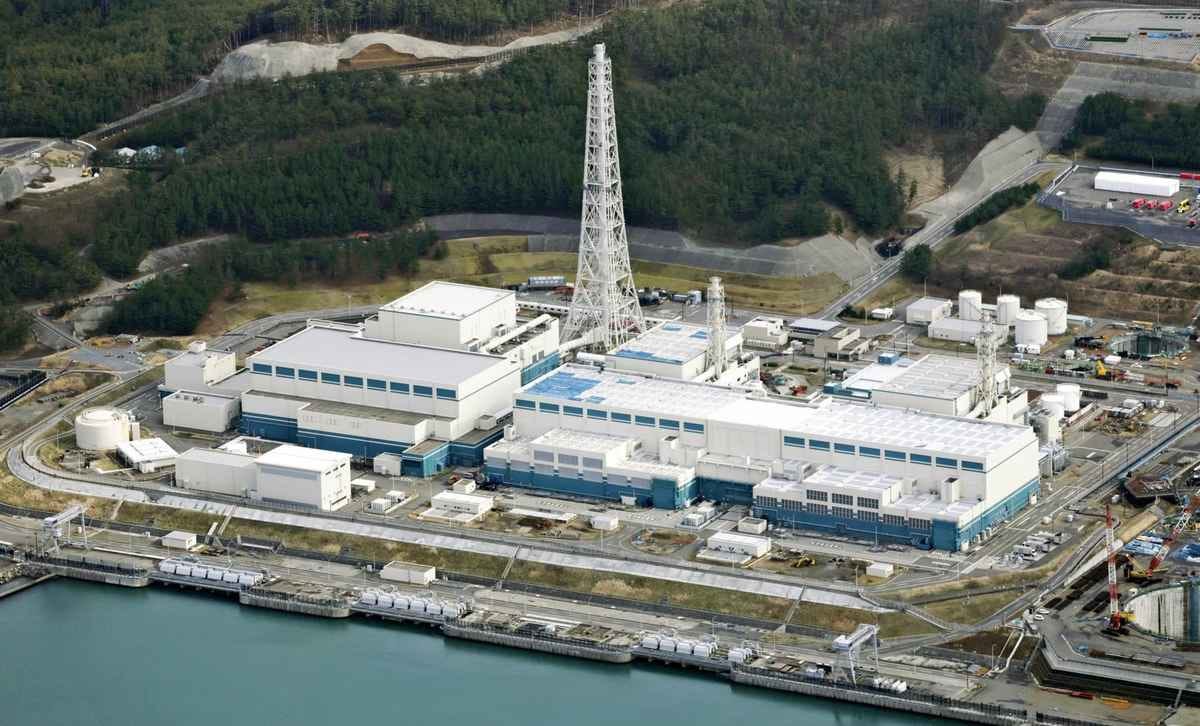
I understand why nobody talks about this one. “Takaichi is rolling nuclear bills faster than any other prime minister” does not have a good ring to it. If anything it makes people nervous because of Fukushima. Still. Electricity is the bill you cannot opt out of, and a permanent 10% cut is worth more to the average household than every handout given.
Then the darker parts
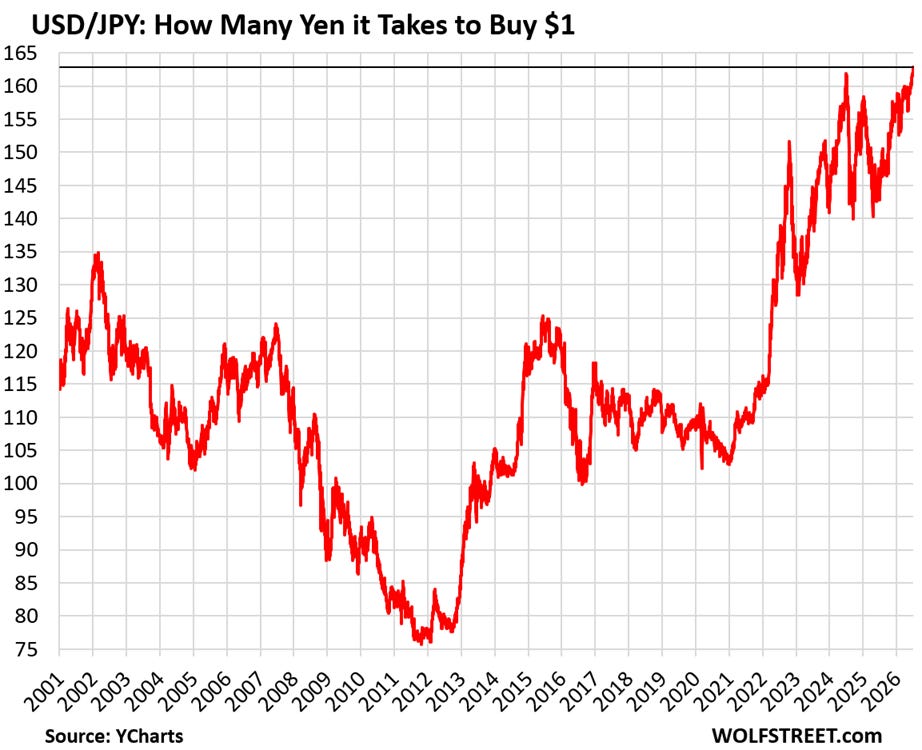
The yen hit 164 in late July, a 40 year low, which forced the first coordinated intervention with the Americans since 1998. The 10 year JGB yield is at 2.81%, highest since 1996. The 30 year hit a record 3.97%. Debt service already eats about a quarter of the budget.
This is sad, because borrowing more money at more expensive prices, plus a weak yen, means every imported calorie (and Japan imports a lot of food) gets more expensive. Every litre of fuel too. The government hands you ¥3,000 of rice coupons with one hand and makes the rice more expensive with the other.
I think this government is going to run into trouble if they really push as far as she seems to want on monetary policy and handouts.
A KonichiValue score on Takaichi’s performance
Speed: A. Takaichi is one of the fastest PM’s Japan has ever had. More legislation in ten months than her three predecessors managed together, and she managed to win a supermajority right after being elected.
Aim: D. She came in against immigration, but she hasn’t really done much about it. Sure, a six-fold visa hike that hits around 1% of foreigners, a PR rule that only catches people whose company is not already paying their tax is something, but what is the overall goal here? On top of that, she wants to spend her way to cheaper living for Japan’s citizen, but what she’s spending on doesn’t really make sense.
Honesty: F. Well first, she keeps propping up policies and efforts that don’t actually change the immigration situation one bit, and she refuses to talk about the cost of her exorbitantly expensive and inefficient policies. Gasoline subsidies are a massive bill that keeps increasing with the low yen, and the proposed food tax will lose ¥4.4 trillion a year. She never said that, and neither will she. She also asked the Bank of Japan privately in May to buy more bonds when long rates rise, which is the oldest bad idea in fiscal history.
Structural reform, a C+. Nuclear and the income tax threshold are genuinely good. Also quite small, which is why she doesn’t get a higher score here.
Damage control, an F. This is Takaichi’s worst trait by far! She was extremely popular when she started, having a 70% approval rating just a few months ago. Now in August, she’s in the 50-40% threshold.
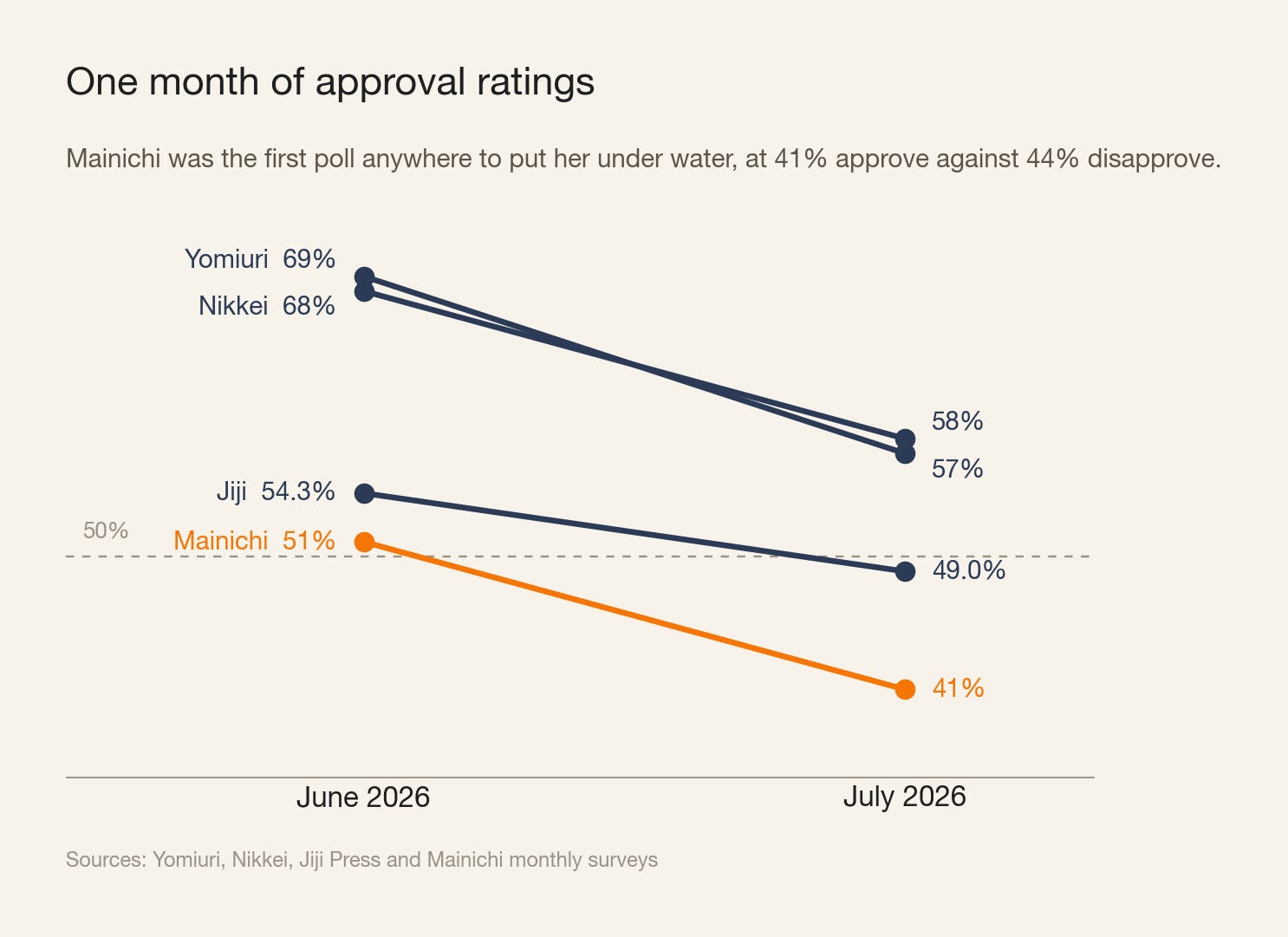
There are many reasons. First, she’s a bit too hot headed for Japanese people. In a Budget Committee about Taiwan, she said Japan would back the country no matter what, and made China go ballistic (no one there asked about Japan’s stance on Taiwan mind you). China stopped imports of Japanese machinery and fish. They tried to stop their people visiting. Chinese arrivals in the first half of 2026 were down 56.4%, and estimates of the hit run to ¥2.2 trillion. For what? Japan changed no policy.
Most recently, she sent some very angry words to the Russian delegates because Putin visited the Kuril islands, islands that Japan claims. Again, there was no plan, no change in policy, and now Putin is just more focused on fucking with Japan…
Also, Takaichi just doesn’t handle pressure that well. She says she sleeps zero to three hours a night and still has time for house work, mimicking former British PM Margaret Thatcher, who was famous for sleeping little and still ironing her own clothes.
Now, Thatcher lived in the 80s. a time where a woman who could do housework and be prime minister was seen as more, let’s say, female-like. Now in 2026, not so much.
Don’t write her off yet
Takaichi still has a supermajority, and there’s not an election until summer 2028. Nobody should discount a prime minister ten months in, least of all one this good at moving the Japanese government machine.
The nuclear restarts could end up doing more for household budgets than any voucher or tax cut ever has. I also like that she can pass boring bills. Tax reform, refundable tax credits, things you don’t really talk about on the news.
But for now, she seems more focused on posing as the protector of Japan against evil foreigners. And sadly, it’s also what gets her the most support. If she wants to stay popular with this as a springboard, every symbolic gesture against foreigners needs to be repeated, louder, each year. That scares me.
The fuel of the fear people are feeling, though, is on the payslip they see every month. They’re getting poorer. They feel squeezed by the very system that is there to protect them.
If you fix the wallet problem, a lot of this anger drains out by itself. I have never seen it work the other way around.
This is a KonichiValue opinion piece. Take anything I say with a grain of salt.
Very well written
Hi. Nice post.
It's hard to feel sympathy for Japanese people when they themselves are responsible for the decline of their country. They chose to all become poor instead of temporary hardship to few groups.
Based on all the research, the core of problem with Japan is the lifetime employment system which reduces labour mobility and increases cost of failures. It worked well when Japan was growing but has become the core issue after stagnation.
But are Japanese people ready to go away from it ? There is a reason most politician don't talk about it because Japanese people like it too much. This has also led to increase in temp workers which again causes problem.
So, basically to save few people from layoff, all Japanese people are willing to suffer.
Also, LDP has been decently competent and populist by giving subsidies and not proposing any reforms that upset people. But they have been overly careful and consensus based.
So, I like the Sanae Takaichi is hot headed and much more authoritative. She is either going to break Japan's back or will chart Japan towards growth path if she stays. Both are good because if she fails, it will lead to crises which provides a good opportunity for reforms. Japan now don't have the financial buffer they had in 1990.
Also, I also like her focus on public-private initiative and industrial policy. Thing is if you are going to place so much burden on Japanese companies ( by lifetime employment) , you need to help them thru other ways to compensate for that so. You need to provide them a safety net, so that they can take risk.
I would be happy if you have any thought on what I said. Thank you.